
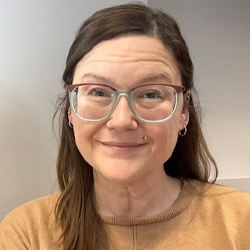
Amanda Boulay, MSN, RN
Assistant Executive Director, Maine State Board of Nursing
Describe your professional, regulatory and community experience related to succession planning and recruitment strategies.
As a nurse for over 15 years, I have been a part of ongoing healthcare transformation. My nursing education and experience in leadership, education, policy development, and collaboration allow me to understand front line nursing, support growth and development of the profession, and ensure accountability through clear rules and standards. Continuing education has led me to complete my master’s degree in nursing with the goal to impact nursing through leadership, policy, and regulation development. Over the years of nursing, I have embraced change and pushed for my own personal growth through a better understanding and involvement in regulation, and with significant support from mentors and leaders. From inpatient nursing to clinical coordinator, management, and adjunct nursing faculty roles, I have embraced the value of identifying key nursing team members, determining the needs of the business, and growing individual talents based on personal strengths and interests. In previous roles I have focused on protocol development, standardization, and education to staff and community. I have acted in public health nursing where the focus was not only on education to the community members, but on engagement and tools for nursing. As a leader in a larger organization, I focused on development of staff to support personal and organizational growth. This process included development and monitoring of a leadership succession plan for staff members. The care we provide for the community is only as good as the tools we put in our toolboxes. Support, education, collaboration, and engagement are key to the growth of a strong team and organization.
Detail your involvement with NCSBN (e.g., attending NCSBN meetings/conferences, subject matter expert panelist, participation on networking calls and NCSBN committee member) that make you a strong fit for the LSC.
While relatively new to the Board of Nursing realm (2024), I have embraced opportunities to learn, grow, collaborate, and support NCSBN members. Active engagement at the 2024 and 2025 annual NCSBN meetings, along with attendance of midyear conferences has allowed me to see the importance of personal and professional growth as well as its impact on something larger- NCSBN! Regular attendance at APRN, Discipline, and Policy Knowledge Networks has offered a collaborative environment, essential education, and outlined the importance of not only the work and learning we do every day, but that each conference, session, meeting, or committee is an opportunity given by others to support my own professional development and success. I am currently a member of the NLC Rules Committee and look to engage in all conversations related to policy and regulation growth, evidence-based practice, and standardization. I look forward to continued growth as an essential part of the NCSBN family. As someone who has seen the importance of the networks, the inclusive nature of the meetings, and the overall support of NCSBN, I am excited to bring this viewpoint and provide support and opportunity for others through the Leadership Succession Committee.
Identify the attributes of effective leaders and explain what leadership means to you:
I think we can all look back on situations in our careers where we felt unsure, unclear, or alone in our roles. Where we woke up and weren’t thrilled about the workday. I also hope we can look back and remember situations where we felt empowered, supported, and excited about our work environment. Where we felt valued for our input and being a part of something bigger. The best leaders don’t necessarily tell you everything you want to hear or hand you everything you want- they empower you; they lift you up, they give you tools to be successful. Those leaders are collaborating, connecting, and offering clarity. Through my experiences in nursing, I have experienced both sides of this coin. The most effective leaders aren’t the ones who were just present, rather they were engaged in my own development and gave me a toolkit to work on my own success! The best leaders aren’t carrying employees to success, they are ensuring you are prepared, you can work through challenges, and you can even bring some ideas to the table. Simon Sinek presented a scenario where there are three circles within each other. The smallest circle is our self- as we are. The middle circle is our stretch zone- where we do the work of learning, growing, collaborating, taking on new tasks, relishing new ideas. And the final circle is the stress zone- where we shut down, we become overwhelmed and can’t offer much to a successful environment. The most effective leaders, the most memorable leaders, are the ones who get you into your stretch zone. Those leaders don’t want you to stay as you are because they see more. Those same leaders recognize the limitation of the stress zone and the balance between supporting growth and stunting it. Effective leadership allows you to see you are a part of something bigger, that your input matters, and the bigger picture is influenced by the work and effort you put in. A leader should inspire others to dream, learn and become. Those team members who grow are the defining moments for a leader and should be celebrated as wins.