
Transition to Practice Study Results
Phase I
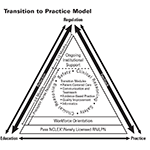
In Phase I we found that outcomes (competence as reported by the new nurses and their linked preceptor; self-reported errors, use of safety practices, work stress, job satisfaction; and hospital data on retention) were significantly better when transition programs had the following characteristics:
- A formalized program that is integrated into the institution, with support from higher administration;
- A preceptorship, and the preceptor should be educated for the role;
- The program is 9-12 months in length;
- Content includes patient safety, clinical reasoning, communication and teamwork, patient-centered care, evidence-based practice, quality improvement, informatics;
- Time for new graduates to learn and apply the content and to obtain feedback and share their reflections;
- Customization so the new graduates learn specialty content in the areas where they are working.
Here are the psychometrics for the Preceptor Evaluation Tool utilized in the TTP study.
Phase II
In Phase II we looked at the feasibility of implementing a transition program into non-hospital settings. Those results found that, while transition to practice programs have the potential for improving outcomes in non-hospital settings, we need more evidence on Phase II sites before boards of nursing can require transition programs.
NCSBN has published a summary of the study's implications for boards of nursing.
The March 2015 Issue of the Journal of Nursing Education featured an editorial by the study's lead investigator, Nancy Spector, PhD, RN, FAAN, discussing the implications of the study for educators.
In the April 2015 Issue of the Journal of Nursing Regulation, the study's investigators published the findings from Phase II of the study.